Preventing Cloud Reconnaissance
Policy in Code, Not in Hope
In the cloud, consistency is crucial: policy in code, minimal privileges, and visibility into drift.
For Preventing Cloud Reconnaissance, success depends on policy-as-code and controls that continuously run alongside the delivery pipeline.
This way you maintain speed in the cloud, without security depending on manual luck.
Immediate measures (15 minutes)
Why this matters
The core of Preventing Cloud Reconnaissance is risk reduction in practice. Technical context supports the choice of measures, but implementation and assurance are central.
Defense measures: a summary
The cynical part of this chapter could end here with the observation that everything we described above could have been prevented with basic hygiene. But let's be constructive.
| Risk | Measure | Priority |
|---|---|---|
| DNS information leak | Minimize public DNS records, use split-horizon DNS | High |
| CT log exposure | Accept it as unavoidable; focus on securing discovered endpoints | Medium |
| Storage bucket misconfiguration | Block Public Access at account level, unpredictable names | Critical |
| Credential leaks in code | Pre-commit hooks, secrets scanning, secrets management | Critical |
| Subdomain takeover | DNS hygiene: remove records during deprovisioning | High |
| Cloud metadata fingerprinting | CDN/reverse proxy, remove informative headers | Medium |
| API enumeration | Rate limiting, IP filtering on sensitive endpoints | High |
| Azure tenant enumeration | Smart Lockout, Conditional Access | Medium |
| Firebase open databases | Audit security rules, test with unauthenticated requests | Critical |
| .env file exposure | Web server configuration: block dotfiles | Critical |
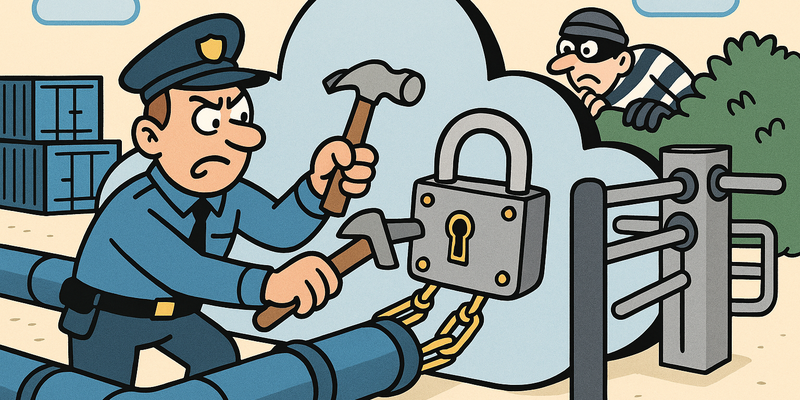
The common thread: most cloud leaks are not software vulnerabilities. They are configuration errors. And configuration errors are human errors. And human errors are unavoidable. The only defense is automation: policy that is enforced by code, not by procedures stored in a SharePoint document that nobody reads.
The uncomfortable truth about cloud reconnaissance
Let's be honest. Everything we discussed in this chapter -- querying DNS records, searching CT logs, guessing storage buckets, searching for credentials on GitHub -- it's not advanced. It requires no deep technical knowledge. It requires no custom tools or zero-days. It requires patience, methodology, and the ability to search in Google.
And that is precisely what makes it so concerning.
The average cloud environment is not vulnerable because of advanced
attacks. It is vulnerable because someone named an S3 bucket
companyname-backup and forgot to disable
public access. Because a developer put an AWS access
key in a Docker Compose file and pushed that file to GitHub.
Because the IT department created a subdomain for
a test environment, decommissioned that test environment, and left the DNS record
in place.
It's not malice. It's forgetfulness at industrial scale. And the cloud makes it worse, not better. In a traditional network, your mistakes are at least hidden behind a firewall. In the cloud, they're on display by the road, with a neon sign above them.
The only consolation? As a pentester, this is good news. There is always something to find.
Reference table
| Technique | Tool/Command | Purpose | MITRE ATT&CK |
|---|---|---|---|
| DNS Recon | dig, host, dnsrecon |
Cloud provider identification via DNS records | T1590.002 |
| CT Log Enumeration | crt.sh, certspotter,
censys |
Subdomain discovery via certificate transparency | T1596.003 |
| Subdomain Enumeration | subfinder, amass |
Complete subdomain inventory | T1590.002 |
| Cloud Asset Discovery | cloud_enum |
S3/Azure Blob/GCP bucket discovery | T1580 |
| S3 Bucket Scanning | s3scanner, aws s3 ls |
Finding publicly accessible buckets | T1530 |
| Azure Blob Scanning | blobhunter, curl |
Finding publicly accessible blob containers | T1530 |
| Shodan/Censys | shodan search, censys search |
Passive asset discovery | T1596.005 |
| GitHub Dorking | GitHub Search, gh search code |
Credentials in public repositories | T1552.004 |
| Credential Scanning | trufflehog, gitleaks |
Automated credential detection in code | T1552.001 |
| HTTP Header Analysis | curl -sI |
Cloud provider fingerprinting via headers | T1592.004 |
| IP/ASN Lookup | whois, ipinfo.io |
Cloud provider identification via IP range | T1590.005 |
| Azure Tenant Enum | login.microsoftonline.com API |
Azure AD tenant and user enumeration | T1589.002 |
| GCP Project Discovery | Firebase, App Engine URLs | GCP project identification | T1580 |
| SSL/TLS Analysis | testssl.sh, sslyze,
openssl |
Certificate chain analysis, load balancer detection | T1596.003 |
| Subdomain Takeover | subjack, nuclei |
Detecting dangling DNS records | T1584.001 |
| .env Exposure | curl, ffuf |
Publicly accessible configuration files | T1552.001 |
| Pastebin/Breach Search | Google dorks, Dehashed | Leaked credentials in public dumps | T1589.001 |
Next chapter: Chapter 3 -- AWS Attacks
Further reading in the knowledge base
These articles in the portal provide more background and practical context:
- The cloud — someone else's computer, your responsibility
- Containers and Docker — what it is and why you need to secure it
- Encryption — the art of making things unreadable
- Least Privilege — give people only what they need
You need an account to access the knowledge base. Log in or register.
Related security measures
These articles provide additional context and depth: